1. How to Evaluate a "Pigeon Net Near Me" Search
A quick search for nearby services often generates numerous classified listings, freelance handymen, and general pest control operators. However, proper bird exclusion requires specialized rigging skills and high-grade materials:
- Specialized Experience: Verify that the technician specializes specifically in tensioned netting installation, rather than offering netting as an occasional sideline.
- Physical Material Verification: A dependable nearby installer carries physical samples of different mesh types (HDPE vs. Nylon) so you can evaluate thickness, texture, and color before committing.
- Safety Equipment Proficiency: Ensure the installation crew uses industrial safety harnesses, fall-protection ropes, and heavy-duty drilling tools suitable for your building type.
2. The Advantage of Working with Established Local Installers
Choosing an established service provider within your local region provides practical advantages over distant contractors:
- Rapid Response Times: Local teams can schedule site inspections and measurements quickly, often within 24 hours of your initial call.
- Familiarity with Local Building Styles: Local technicians understand regional architectural nuances—such as Kerala-style sloped eave projections, coastal wind patterns, and specific society balcony regulations.
- Reliable After-Sales Support: If an anchor hook requires adjustment after a major storm, a local technician can visit promptly without extended travel delays.
3. Key Questions to Ask Before Hiring a Nearby Netting Contractor
Protect yourself from shoddy workmanship by asking four critical questions before confirming your booking:
- "What polymer is the netting made from, and is it certified UV-stabilized?" (Ensure they use virgin HDPE or high-tensile nylon rather than cheap recycled plastic).
- "What hardware will be used for the perimeter frame?" (Look for stainless steel SS 304 eye-bolts and PVC-jacketed wire cables rather than plastic hooks).
- "Is the quote all-inclusive?" (Verify that the price covers site measurement, materials, hardware, labor, and final clean-up without hidden add-ons).
- "What warranty is provided in writing?" (Ensure both material degradation and installation workmanship are covered by a written service warranty).
4. Preparing for Your Doorstep Site Assessment
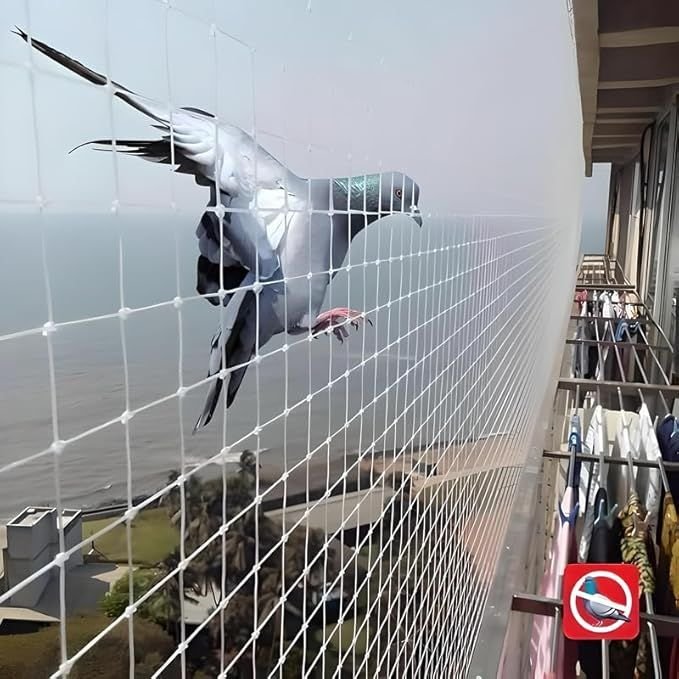
To make the most of your local technician’s site visit, take these simple preparatory steps: Move outdoor clothes dryers, planters, or loose furniture away from railings to give the technician clear access to the perimeter. Point out specific spots where pigeons roost, nest, or access utility pipes behind air conditioner units. Check if your apartment owners' association has specific rules regarding net colors (black vs. white) or drilling permissions.
5. Verifying Material Quality: Avoiding Counterfeit and Unstabilized Nets
Not all nets sold in local hardware markets are suitable for long-term outdoor use. Substandard nets degrade rapidly in coastal sunlight:
- The UV Degradation Test: Non-UV-stabilized nylon becomes dry, brittle, and powdery within 9 to 12 months, eventually snapping under slight bird pressure.
- Virgin HDPE Monofilament: High-quality nets feature continuous, smooth multi-strand twine that does not absorb moisture, stretch out of shape, or fray easily.
- Mesh Knot Integrity: Check that the mesh squares feature machine-knotted intersections that do not slide or distort when pulled diagonally.
6. Applications for Homes, Apartments, and Local Businesses
A local netting technician provides versatile solutions across multiple building configurations: full-perimeter balcony enclosures, kitchen dry balconies protecting laundry appliances, window sills and air conditioner ledges, as well as commercial shopfront signages and office rooftop equipment yards.
7. Understanding Quotation Breakdowns and Avoiding Hidden Charges
A trustworthy nearby contractor provides a clear, itemized quote based on verifiable parameters: accurate measurement of length multiplied by height, clearly listing whether 25 mm, 30 mm, or 40 mm mesh is quoted, specifying the number of stainless-steel hooks, perimeter wire rope length, turnbuckles, and clear inclusion of all labor, ladder work, and safety rigging fees.
8. Typical Timelines from Service Enquiry to Final Fitting
When working with an efficient nearby service team, the process moves swiftly: You contact the service on Day 1 to describe your requirements and receive a preliminary estimate. On Day 1 or 2, the technician visits for laser measurements and sample evaluation. On Day 2 or 3, the installation crew arrives with pre-cut materials and equipment, completing a standard balcony installation within 2 to 3 hours.