
1. Navigating Diverse Safety Netting Needs in Residential Homes
A broad search for safety netting reflects diverse household priorities: parents of young toddlers seeking reliable physical barriers across balcony railings and open window sills; pet owners requiring bite-resistant, claw-proof netting to prevent curious cats or dogs from slipping through balusters; apartment dwellers wanting to stop pigeons from nesting without blocking fresh air; and housing society administrators securing common utility shafts, open stairwell voids, and terrace perimeters.
A qualified local contractor offers tailored solutions for each scenario, ensuring that the correct twine gauge, mesh aperture, and anchoring system are matched to the specific safety requirement.
2. Multi-Purpose Safety Netting Applications
Modern safety netting systems are adaptable across diverse residential settings:
- Balcony Safety Enclosures: Full-height netting installed from railing to ceiling, providing a secure perimeter barrier.
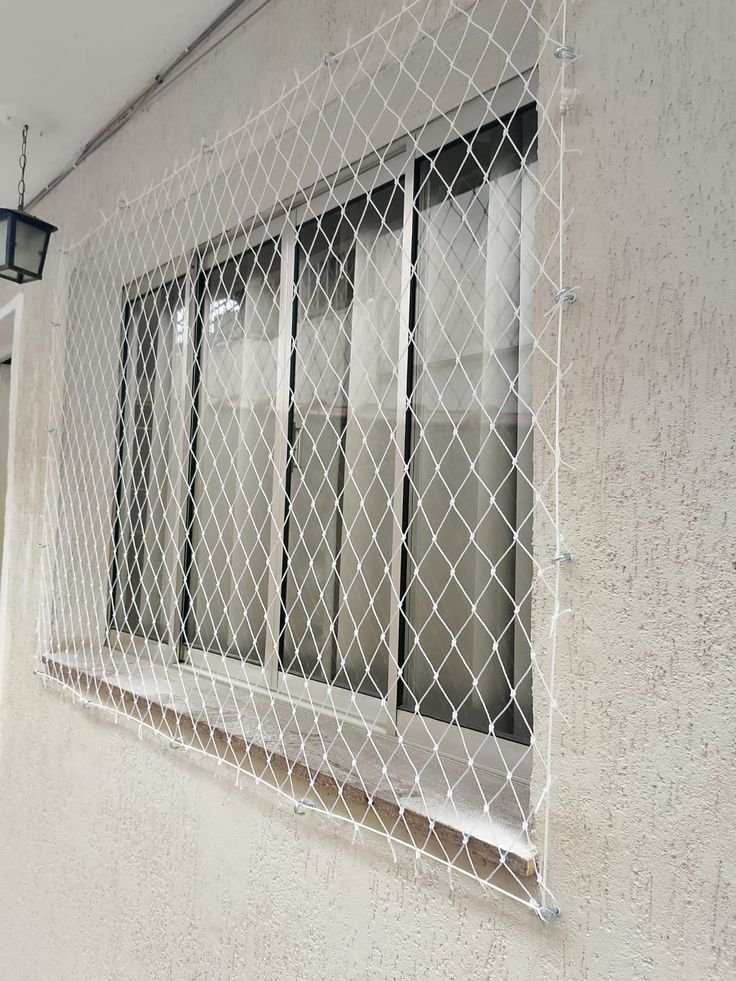
- Window Safety Screens: Flush-mounted or reveal-mounted nets that allow windows to stay open for ventilation without safety risks.
- Stairwell Void Protection: Vertical or horizontal netting stretched across multi-story open stairwell wells in duplexes and apartment atriums.
- Terrace & Parapet Extensions: Raising the effective barrier height of low rooftop parapet walls during family gatherings.
- Internal Duct and Plumbing Shafts: Sealing off building recesses to prevent bird entry and stop accidentally dropped items.
3. Balcony Protective Barriers for High-Rise Apartments
Balconies are primary relaxation zones, but elevated floors demand responsible safety precautions. High-tensile safety netting acts as an elastic containment envelope. Unlike rigid metal bars, high-grade knotted nylon nets flex slightly under dynamic impact, absorbing energy safely without causing injury. Fine-gauge black twine remains virtually invisible against daylight, and the open square mesh allows coastal breezes to flow freely into living rooms.
4. Child Safety Considerations: Creating an Engineered Defense
When toddlers begin exploring, standard balcony railings can present potential hazards:
- Climbing Risks: Horizontal railing designs can be climbed like ladder rungs. Full-height netting seals off the climbing route entirely.
- Railing Gaps: Wide baluster spacing can allow a child’s body to slip through. Netting covers every gap cleanly.
- Falling Objects: Nets stop heavy toys, kitchen items, and shoes from being dropped over the edge, protecting people below.
Notice: Netting can provide an additional protective barrier, but it is not a replacement for active adult supervision. Adult presence remains the essential rule of family safety.
5. Pet Containment Solutions for Dogs and Cats
Companion animals require specialized netting considerations. Cats can squeeze through remarkably small openings; a 25 mm to 30 mm square mesh prevents felines from slipping their heads through. High-density multi-strand polyethylene or braided nylon resists animal claws and chewing attempts, preventing pets from balancing on narrow, slippery railing edges.
6. Window, Terrace, and Stairwell Safety Installations
Safety risks extend beyond the main living balcony. Installing safety nets across French windows and sliding glass doors allows them to stay open for ventilation while keeping children and pets safe inside. In duplexes, open-riser staircases present fall hazards for small children; installing vertical safety netting creates a discreet protective screen without blocking light or interior airflow.
7. Understanding Polymer Quality: Nylon, Polyethylene, and UV Resistance
Choosing the correct polymer ensures your netting performs reliably over time:
Braided Nylon
Offers the highest tensile elasticity and breaking strength, making it the preferred material for child safety and heavy-impact barriers.
High-Density Polyethylene
Chemically inert, 100% moisture-resistant, and highly resilient against continuous UV radiation and monsoon rain.
UV Stabilization
Virgin polymers compounded with chemical UV inhibitors prevent sun-induced brittleness, ensuring 5 to 8+ years of outdoor lifespan.
8. Key Criteria When Selecting a Local Safety Net Contractor
Before finalizing your local installer, evaluate these critical operational indicators: verify that the crew uses structural concrete anchors and tensioned perimeter cables rather than temporary stick-on hooks; ensure you receive a written warranty covering both material degradation and installation stability; look for itemized quotes detailing square footage, hardware grade, and labor costs without hidden extras; and confirm they offer doorstep consultations with physical samples.
9. Transparent Pricing Models for Residential Safety Netting
Cost calculations for residential safety netting depend on verified project variables: total surface area across all openings, twine gauge and tensile rating (heavy 2.5 mm safety twine commands a slight premium over 1.0 mm bird netting due to polymer volume), stainless steel hardware grade (SS 304/SS 316), and installation complexity (standard balconies vs curved ledges or multi-story shafts).